Bedroom rug placement is about positioning floor coverings to create warmth, comfort, and visual balance. The right placement transforms a cold floor into a cozy space. It affects how your room looks and feels every single day.
Proper rug positioning brings comfort when you step out of bed. It adds warmth during cold mornings. It creates balance in your room’s design. The visual impact makes your bedroom feel complete and well-designed.
What Does Proper Rug Placement in a Bedroom Mean?
Proper rug positioning means placing floor coverings where they serve both function and style. The rug should cover key walking areas near your bed. It should create a soft landing zone for your feet each morning.
Good placement considers bed size, room dimensions, and furniture arrangement. The rug anchors your bed visually. It defines the sleeping zone within your larger bedroom space.
Most designers recommend extending rugs beyond the bed’s edges. This creates symmetry and balance. It also ensures you step onto soft fabric instead of hard flooring.
How Rug Placement Affects Bedroom Balance
Rug positioning creates visual weight in your room. A centered rug under your bed draws the eye to the focal point. This makes the space feel intentional and well-planned.
Poor placement creates awkward empty spaces. It can make furniture appear disconnected. Proper positioning ties all elements together into one cohesive design.
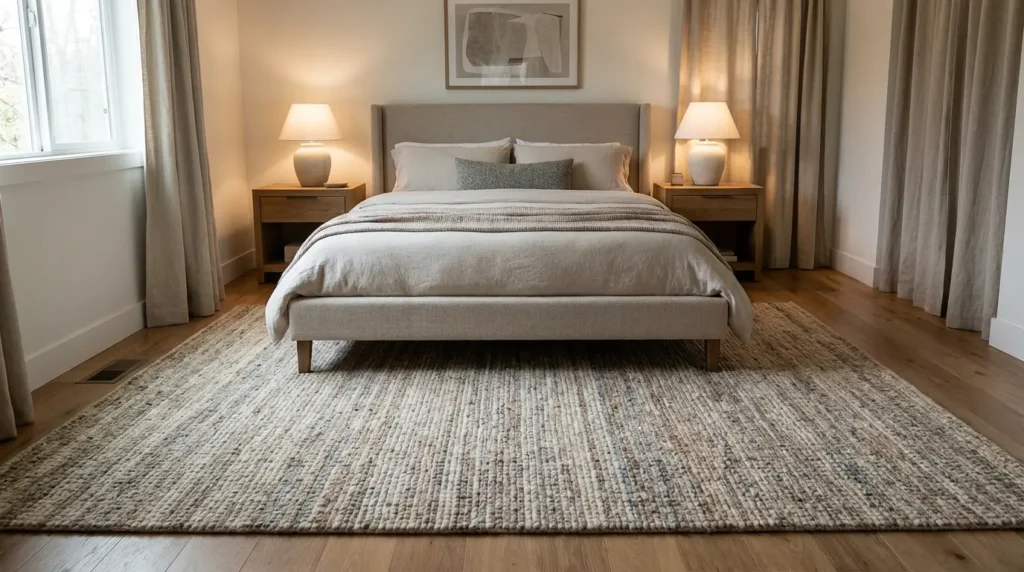
Why Rug Positioning Impacts Comfort
The location of your rug determines your daily comfort level. Placing it where you step out of bed adds instant warmth. This small detail improves your morning routine significantly.
Cold floors feel jarring first thing in the morning. A well-placed rug eliminates this discomfort. It creates a gentle transition from bed to floor.
Common Bedroom Rug Placement Mistakes
Many people place rugs too small for their bed size. The rug should extend beyond furniture edges. A tiny rug under a large bed looks disconnected and awkward.
Another mistake is pushing rugs completely against walls. This creates an unbalanced look. Leaving some floor space visible around edges creates better visual flow.
How Should a Rug Be Placed Under the Bed?
A rug should extend 18 to 24 inches beyond each side of your bed. This creates a landing zone for your feet. It ensures both partners have soft flooring when exiting the bed.
The rug can be centered under the bed or placed at the foot. Both options work depending on your room size. The key is creating symmetry and adequate coverage.
For best results, position the rug so it extends equally on both sides. This creates visual balance. It also provides equal comfort for both sides of the bed.
Full Bed Rug Placement Explained
Full placement means the entire bed sits on the rug. The rug extends beyond all sides of the bed frame. This creates a luxurious, hotel-like appearance in your room.
This approach works best in larger bedrooms. You need a rug at least 8×10 feet for queen beds. King beds typically require 9×12 rugs or larger.
Partial Rug Placement Under Beds
Partial placement puts only the bottom two-thirds of the bed on the rug. The rug extends from the foot of the bed. This saves money and works well in smaller rooms.
This style still provides soft flooring where you step out. It uses less rug material than full placement. The visual effect remains balanced and intentional.
Runner Rugs and Side Placement
Runner rugs offer an alternative to full-size options:
- Place two matching runners on each side of the bed for symmetrical styling
- Use a single runner at the foot of the bed for minimalist rooms
- Choose runners that extend at least 2 feet beyond the bed length
- Position runners parallel to the bed for clean, modern lines
Rug placement works perfectly in narrow bedrooms. It provides comfort without overwhelming small spaces. The streamlined look suits contemporary design styles beautifully.
What Is the Best Rug Size for Bedroom Layouts?
The best rug size depends on your bed dimensions and room size. Your rug should extend 18 to 24 inches beyond the bed on all sides. This creates proper proportion and adequate foot coverage.
Measure your bed and room before shopping and add 36 to 48 inches to your bed’s width and length. This calculation gives you the minimum rug dimensions needed.
Consider furniture placement when selecting size. Nightstands can sit on or off the rug. So both approaches work if the rug extends adequately beyond the bed frame.
Rug Sizes for Queen and King Beds
Queen beds pair well with 8×10 or 9×12 rugs. These sizes provide ample coverage on all sides. The larger size creates a more luxurious, grounded appearance.
King beds need at least 9×12 rugs for proper coverage but some designers recommend 10×14 for spacious rooms. The extra size ensures adequate foot landing zones.
Rug Size for Small Bedrooms
Small bedrooms benefit from 5×8 or 6×9 rugs. These sizes fit at the bed’s foot without overwhelming the space. They provide comfort without making rooms feel cramped.
Alternatively, use two 3×5 runners on each side. This creates symmetry in tight quarters. As the split approach saves floor space while maintaining comfort.
Choosing Rug Size Based on Layout
Understanding size options helps create the right bedroom atmosphere.
| Rug Size | Bed Size | Placement Result | Visual Effect |
| 5×8 | Twin/Full | Foot placement | Cozy, proportional |
| 8×10 | Queen | Partial under bed | Balanced, spacious |
| 9×12 | Queen/King | Full under bed | Luxurious, grounded |
| Runners (2.5×8) | Any size | Side placement | Modern, streamlined |
Choosing the right dimensions ensures your bedroom feels intentional. Proper sizing creates visual harmony. Your room appears professionally designed with correct proportions.
Is Planning Bedroom Rug Placement Really Worth It?
Planning rug positioning is absolutely worth the effort. Proper placement improves daily comfort and room appearance. It prevents costly mistakes and ensures you buy the right size.
Taking time to plan saves money in the long run. You won’t need to replace poorly sized rugs. Your investment creates lasting comfort and style for years.
The difference between planned and random placement is immediately visible. Thoughtful positioning creates magazine-worthy bedroom styling. It shows attention to detail that elevates your entire space.
Comfort and Daily Use Benefits
Strategic rug positioning improves your morning routine. Stepping onto soft fabric instead of cold floors feels luxurious. This small comfort affects your mood every single day.
Well-placed rugs reduce noise in upper-floor bedrooms. They provide cushioning underfoot. These practical benefits justify the planning process completely.

Visual Styling and Room Flow
Proper rug layout creates visual continuity. It connects your bed to other furniture pieces. The room flows naturally from one area to another.
Good placement makes small rooms appear larger. It defines zones without walls or dividers. Your bedroom gains depth and dimension through strategic positioning.
Long-Term Design Impact
Smart rug positioning adapts as you redecorate. A well-placed rug works with different bed frames and styles. You won’t need to replace it when updating other elements.
Quality placement increases your bedroom’s perceived value. It shows design sophistication to guests. This attention to detail distinguishes your space from average bedrooms.
Conclusion — Should You Carefully Plan Rug Placement?
Yes, you should absolutely plan your bedroom rug layout carefully. The right positioning creates immediate comfort and lasting visual appeal. It transforms your bedroom from ordinary to exceptional with minimal effort.
Take time to measure, visualize, and select appropriate sizes. Consider your daily routine and design preferences. Thoughtful rug positioning remains one of the simplest ways to upgrade your bedroom’s comfort and style.
Friquently Asked Question
Is rug placement important in small bedrooms?
Yes, proper placement maximizes limited floor space and prevents rooms from feeling cramped or unbalanced.
Should rugs go fully under the bed?
Full placement works for large rooms, but partial placement (extending from the foot) suits most bedroom sizes perfectly.
Can I use two rugs instead of one?
Yes, matching side runners create symmetry and work beautifully in narrow or contemporary bedroom designs.
What rug size looks best in bedrooms?
8×10 for queen beds and 9×12 for king beds provide ideal coverage with proper proportions.
Do rugs make bedrooms feel warmer?
Yes, rugs add physical warmth and create psychological coziness through soft textures and insulation.
Should nightstands sit on the rug?
Both on-rug and off-rug placement work; choose based on your rug size and desired visual effect.
Are rugs necessary on carpeted floors?
Not necessary, but layering rugs over carpet adds texture, defines zones, and introduces color or pattern contrast.